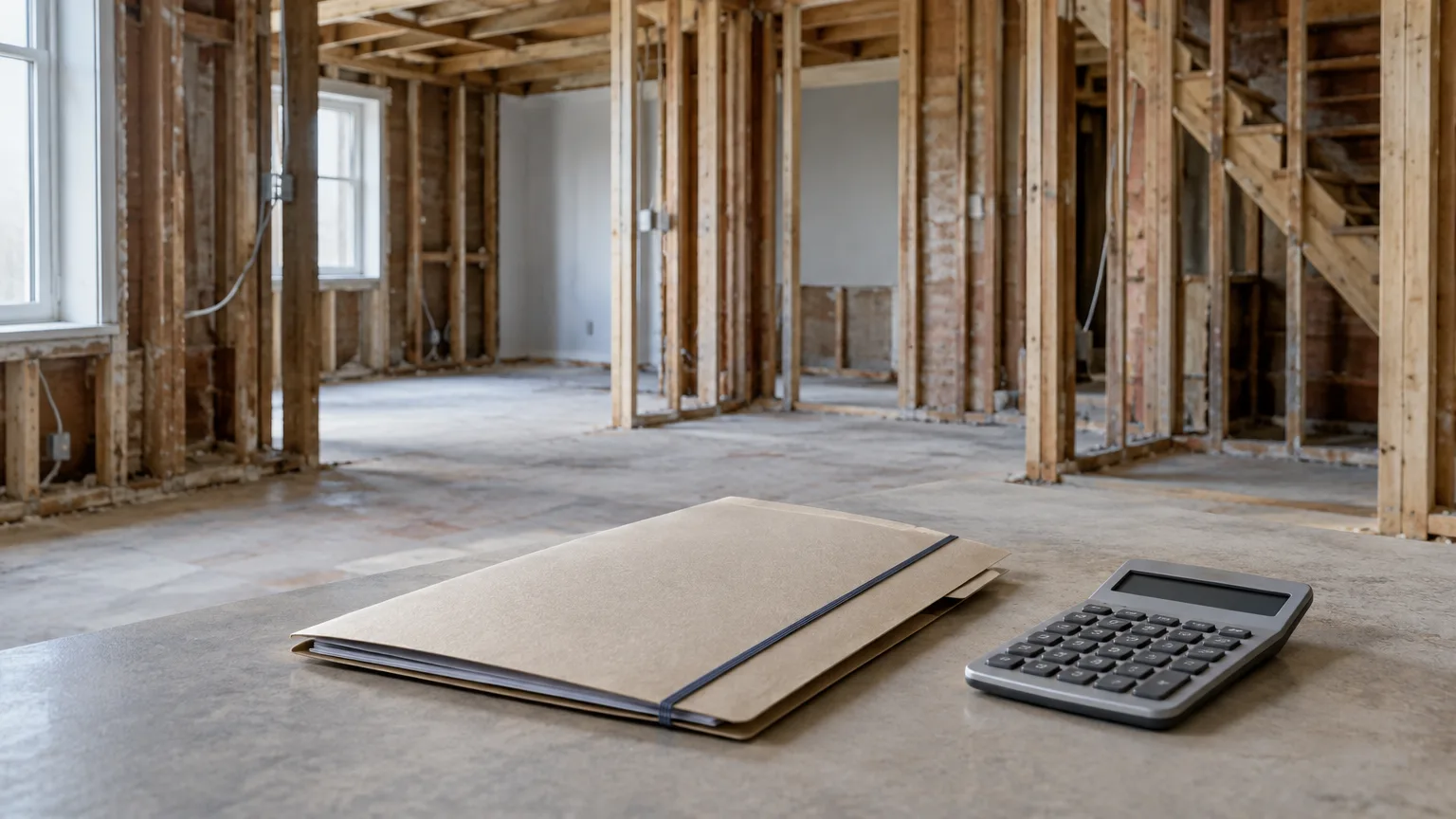
A company that sold a gutted Toronto house after its contractor abandoned the rebuilding work was not required to collect HST on that sale, the Tax Court of Canada has ruled in a decision emphasizing the unusual facts of the failed renovation.
In 2520356 Ontario Corp. v. The King, 2026 TCC 161, issued September 1, Justice Randall S. Bocock found that demolition without meaningful reconstruction had not made the company a builder carrying out a substantial renovation when it sold the property.
The court referred the assessment back for reconsideration and reassessment. The company succeeded on the HST charged on the sale but lost $891.59 in input tax credits it had claimed in error. It was awarded $300 in costs.
A plan to renovate stopped after demolition
The company bought the property in October 2018 intending to renovate it completely and resell it. It hired a general contractor almost immediately. Over the next two years, the contractor performed extensive demolition but almost none of the reconstruction, then abandoned the work.
The company sold the unrenovated property in September 2020 for $970,000, at a substantial loss. Its principal business was operating a strip mall; this property was a separate, one-off project.
The Crown argued that engaging a contractor to perform a substantial renovation made the company a builder under the Excise Tax Act and that its sale was therefore taxable. It also relied on input tax credits claimed in connection with the property.
The company maintained that its original intention was not enough: the planned substantial renovation had never occurred, so the eventual sale was an exempt supply of used residential property.
The condition at sale mattered
Bocock distinguished cases asking whether completed renovation work was substantial enough. Here, the prior question was whether a renovation had occurred at all.
The judge treated renovation as involving both removal and restoration or reconstruction. The contractor had stopped before the latter stage. Measuring how much of a building had been removed, normally a useful indicator of substantial renovation, could not simply substitute for examining whether rebuilding had taken place.
The original engagement contemplated substantial renovations. But the undertaking had ended before the company supplied the property by sale. On these facts, the court found that the company was not a builder of a substantially renovated residential unit at that time.
The result was tied to an abandoned project and the absence of meaningful rebuilding. It was not a general exemption for all unfinished construction or a ruling that an owner’s original intention never matters.
Tax credits still had to be corrected
The court separately examined the $891.59 in input tax credits claimed for 2020. Evidence clarified that other credits initially associated with the house actually concerned the company’s strip-mall business.
The disputed amount related to architectural fees. The court accepted that these credits were claimed inadvertently, noting the late invoices and the company’s failure to claim other, potentially larger credits connected with selling the property. Their inclusion did not determine the company’s builder status.
That finding did not let the company keep the erroneous credits. The judgment expressly denied them and required the net-HST calculation to be reconciled.
The limited costs award reflected the circumstances, including facts clarified only at trial, the mistaken credits, an unclear notice of appeal and an initial Crown concession about the tax calculation. The judgment does not establish that reassessment or payment has since occurred.



