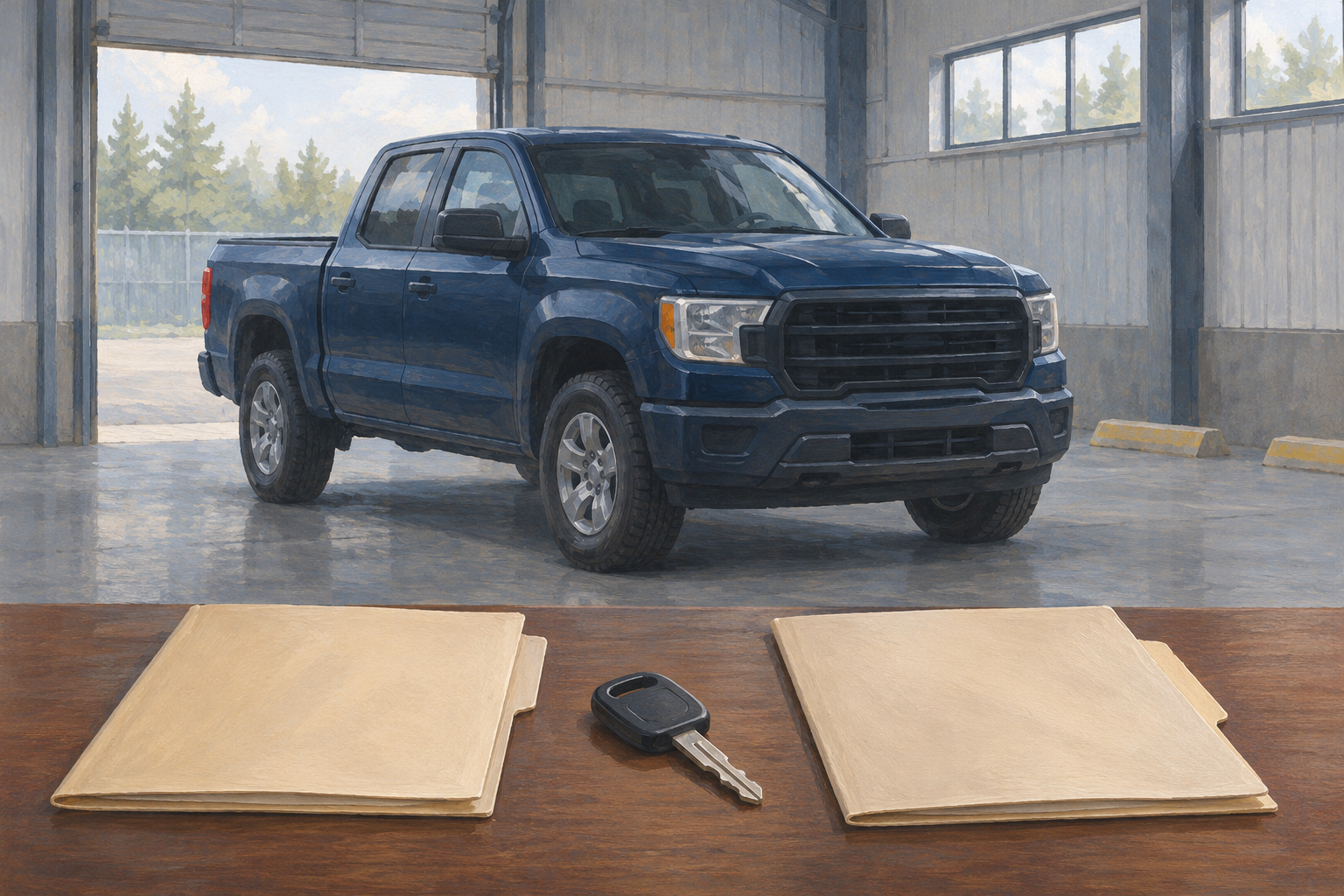
A British Columbia judge has approved the forfeiture and sale of a pickup truck without first resolving a priority dispute between two uninvolved secured creditors, directing that the net proceeds be held in court until their claims can be addressed.
In British Columbia (Director of Civil Forfeiture) v. Scott, 2026 BCSC 2053, Justice J. G. Morley concluded that the Civil Forfeiture Act permits a conditional process for determining which lender is paid first if the sale produces too little to satisfy both debts.
Requiring the lenders to litigate their priority before knowing whether there would be a shortfall could waste money, the judge reasoned. The order allows the sale to proceed while preserving their claims against the remaining proceeds.
The oral judgment was delivered August 21. Its front page was corrected on November 10.
Different priorities in two registries
The Director of Civil Forfeiture sought default judgment against a 2020 GMC Sierra owned by 2522781 Alberta Ltd. Joshua Gerald Duncan Scott was the company's sole director and shareholder.
The pleadings alleged that Scott used the truck to strike a person and a building before leaving the scene. Those allegations were deemed admitted because the defendants defaulted. The court found a basis for civil forfeiture under section 6(2); the reasons do not report a criminal conviction.
The complication was that the Bank of Nova Scotia and Driver Capital Ltd. each held liens registered in both Alberta and British Columbia, with different priorities in the two registries. Morley found that both were uninvolved interest holders.
The director claimed any surplus after the liens and sale costs. If the vehicle fetched enough to cover everything, the competing priorities would not affect either lender's recovery. If it did not, their ranking would matter.
Protection without an unnecessary priority fight
Section 27 requires the court to protect an uninvolved interest holder's interest unless doing so would be clearly contrary to the interests of justice. Morley said the court therefore had to protect the two creditors if it could.
Section 28 permits orders for the disposition of property and directs how sale money is applied after taking account of encumbrances. The judge concluded that this language authorized a contingent interpleader process: a later determination of competing claims to the same fund if that became necessary.
The provision's text, context and purpose supported a broad power to maximize value and do justice among uninvolved interest holders. Forcing an immediate priority contest that might ultimately prove immaterial would be uneconomic for both the creditors and the director.
Claims move from the truck to the proceeds
The order forfeited the truck and its proceeds to the province, effective October 16, 2025, when the proceeding began. Subject to the order's protections, existing interests were extinguished and title vested in the government free of encumbrances.
Each creditor must discharge its registrations in both provinces within 10 days of receiving notice and provide the director with its security documents and a statement of the debt and payment terms. If a creditor does not comply, the director may discharge its British Columbia registration.
The director has exclusive conduct of the sale and must make reasonable efforts to sell as soon as practicable. Reasonable expenses, including seizure, storage, towing and sale expenses, come first. The remainder must be paid into court and stand in place of the vehicle.
The creditors may then apply for repayment on notice to each other. If the fund cannot satisfy both debts, either may seek a declaration of their relative priority and payment accordingly.
If money remains unclaimed one year after the order is entered, the director may seek a further order transferring it to the civil forfeiture account. That transfer is not automatic. The reasons do not establish that the truck has been sold, the size of any shortfall or that either creditor has received payment.
Read the full decision on CanLII.